
Leading Through Change with Clarity and Confidence

What if the secret to driving business results isn’t found in spreadsheets or sales targets, but in the strength of your people strategy? That’s the powerful truth Bri Newman, CEO of HR4, brought to Women In Automotive 2025 in her breakout session “Driving Human Capital Forward in Times of Change.”
In an industry where success has traditionally been measured by volume and margins, Bri is championing a different narrative—one where intentional leadership and aligned people practices become the driving force behind sustainable performance. Her message resonates especially deeply with women navigating leadership roles in automotive, where the ability to lead through uncertainty isn’t just valuable—it’s essential.
The Foundation: Why People Strategy IS Business Strategy

What inspired you to bring this message to WIA2025?
“In automotive, success has traditionally been measured by volume and margins,” Bri explains. “But what’s become increasingly clear is that sustainable performance hinges on the strength of your people strategy. After years of helping dealerships navigate turnover, talent shortages, and cultural transformation, I’ve seen firsthand how intentional leadership and aligned people practices drive business results. It’s not just an HR topic—it’s a leadership imperative.”
This perspective shift matters deeply for women in automotive who often find themselves leading during transitions, managing diverse teams, or stepping into roles where they’re expected to drive change while maintaining stability. The truth? Your ability to invest in people isn’t separate from your business acumen—it is your business acumen.
Navigating Change: The Power of Focusing on What You Control
Change is constant in today’s dealership environment, and as women leaders, we often feel the pressure to have all the answers. But Bri offers a refreshing perspective on leadership during transitions.
What’s one common leadership mistake you see during times of transition—and how can leaders correct it?
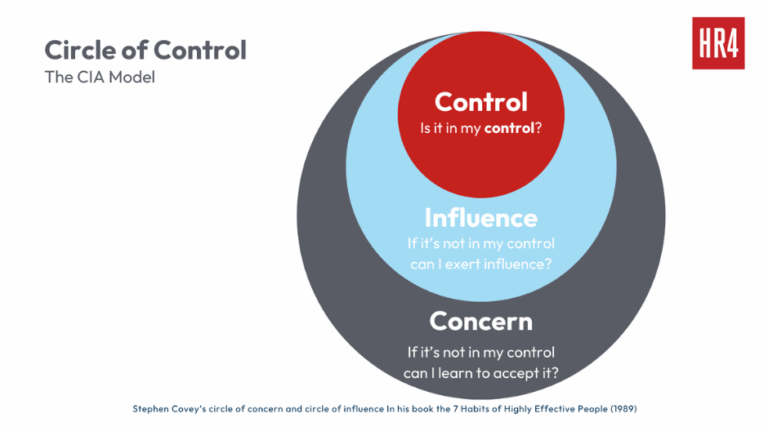
“One of the most common mistakes is losing focus on what’s actually within your control,” she shares. “During times of transition, it’s easy for leaders, and their teams, to get caught up in the noise: market shifts, staffing changes, customer expectations. The Circle of Control and CIA model are powerful because they bring the focus back to what you can do right now.”
Here’s what makes this insight so valuable for women in automotive: we often carry the emotional weight of our teams during challenging times. Bri’s approach gives you permission to focus your energy where it can make the biggest impact.
“You can’t control everything, but you can control how clear you are about where you’re going,” she continues. “If the goal isn’t defined, it’s easy to drift. But when leaders clearly communicate the destination and expectations, they create alignment. Clarity becomes the anchor, and that’s something completely within your control.”
Tools That Transform: Circle of Control and CIA Model
What makes these tools so effective, especially in high-pressure settings?
“These models simplify complexity,” Bri explains. “When leaders are overwhelmed, they need actionable tools to quickly triage what they can control, what they can influence, and what they have to accept. That clarity reduces emotional reactivity and helps leaders show up with intention, especially during tough conversations or when navigating uncertainty.”
For women navigating leadership challenges in automotive, this framework becomes particularly powerful. How often do we find ourselves spinning our wheels on factors beyond our influence? These tools help you channel your leadership energy where it matters most.
The Critical First Impression: Onboarding as Culture Foundation
In high-turnover environments like dealerships, first impressions aren’t just important—they’re everything. And as women leaders, we understand the power of making someone feel welcomed and valued from day one.
What role does onboarding play in setting the tone for long-term team culture and performance?
“Onboarding is the handshake between your brand and your new hire, and in high-turnover environments like dealerships, that first impression is everything,” Bri notes. “It’s where culture is communicated, expectations are set, and early wins are supported. A structured, technology-enabled onboarding process, like the kind we help power at HR4, accelerates trust, boosts engagement, and lays the foundation for long-term success.”
This resonates deeply with women leaders who often excel at creating inclusive, supportive environments. Your natural tendency to nurture and develop others becomes a strategic advantage when you systematize it through intentional onboarding.
Proactive Retention: Building Loyalty from Day One
Rather than waiting for problems to surface, Bri advocates for a proactive approach that speaks to the heart of effective leadership.
What’s a more proactive way to build loyalty and reduce turnover from the start?
“One of the most effective, and overlooked, ways to build loyalty is by ensuring post-hire clarity,” she explains. “That means being crystal clear on what success looks like in the role, how progress will be measured, and what support systems are in place to help the new hire thrive.”
She continues, “When expectations are vague, it creates room for misalignment and disengagement. But when a new team member is welcomed with a structured onboarding plan, regular feedback, and early wins, they feel anchored. Tools like digital onboarding plans, automated progress tracking, and real-time feedback, hallmarks of platforms like HR4, can help even lean HR teams deliver this consistency at scale.”
This approach aligns perfectly with how many women naturally lead—through clear communication, supportive structures, and genuine investment in others’ success.

Learning from National Strategy: Alignment as a Process
Bri’s experience leading national customer experience strategy for Acura offers valuable insights for women stepping into larger leadership roles.
What did that teach you about aligning teams around long-term change?
“It taught me that alignment is a process, not an event,” she reflects. “You can’t expect a team to rally behind a vision they don’t understand or see themselves in. We had to co-create the strategy with our dealers, make it measurable, and bring it to life in a way that made sense at the store level. The magic happened when we stopped pushing change and started enabling it.”
This insight is gold for women leaders who often find themselves championing change initiatives. Your success isn’t measured by how well you can push an agenda, but by how effectively you can create buy-in and co-ownership.
Cultural Transformation: The Shift Toward Coaching Cultures
In your work with dealers across North America, what cultural shifts are you most excited to see taking root?
“I’m excited to see a real shift toward coaching cultures—where performance conversations are more consistent, feedback is timely, and leaders are genuinely invested in their people’s development,” Bri shares enthusiastically.
She continues, “What’s especially encouraging is the growing adoption of technology to support this shift. Tools that used to feel optional are now being seen as essential. AI, in particular, is helping managers become more effective by surfacing insights they might otherwise miss, nudging timely check-ins, and automating tedious HR tasks.”
For women in automotive, this shift represents an opportunity to leverage your natural coaching abilities while embracing technology that amplifies your impact. “We’ve seen firsthand through our work at HR4 how AI-powered nudges and automation can lift dealership performance and free up leaders to focus on coaching, not chasing paperwork.”
Balancing High Performance with Well-being
You’re passionate about “cultures where the finish line is always moving.” How do you balance that with employee well-being and sustainability?
“It’s all about pace and communication,” Bri explains. “High-performance doesn’t mean burnout—it means progress with purpose. You can challenge people to grow while still creating psychological safety. Celebrate milestones, normalize rest, and ensure your team knows that their health isn’t a trade-off for results.”
This balance speaks directly to the challenges many women face in leadership—driving results while maintaining the human-centered approach that often defines our leadership style.
Personal Leadership: Staying Grounded Through Change
Even leaders need strategies to stay centered, and Bri’s personal approach offers practical wisdom.
What’s one personal habit or mindset that helps you stay grounded through change?
“For me, it starts with structure. I anchor my day with a workout—could be at the gym, could be a walk or a Pilates class, it clears my head and sets the tone. Throughout the day, I do a lot of self-talk and course-correcting to make sure I’m showing up with intention. I try to be as prepared as possible for every meeting and approach difficult situations thoughtfully, not reactively. Grounding myself isn’t about eliminating stress, it’s about choosing how I meet it.”
This insight reminds us that self-care isn’t selfish—it’s strategic. Your ability to lead others through change starts with how you lead yourself through it.
Why WIA2025 Matters
Why did you say yes to speaking at WIA2025?
“Because this is more than a conference—it’s a community of people committed to changing the narrative in automotive. I’m passionate about helping leaders at every level step into their power, and WIA is the perfect stage to do that.”
Bri’s excitement about sharing practical tools reflects the heart of what makes WIA special—women supporting women with actionable strategies, not just inspiration.

What were you most excited to share with the Women In Automotive audience this year?
“I was excited to share practical tools that help leaders show up with more confidence and clarity, especially in the face of change. I want every attendee to leave feeling equipped to lead their teams with purpose, not just pressure.”
A Leadership Style Built for the Long Haul
When asked to describe her leadership style as a car, Bri’s answer perfectly captures her approach: “A hybrid SUV. It’s built for performance and efficiency, adaptable to different terrains, and designed for the long haul. It blends strength and flexibility, which is exactly how I aim to lead.”
This metaphor resonates for women in automotive—we need leadership styles that can handle different challenges, perform under pressure, and sustain over tim
Your Next Steps: Leading with Intention
Bri Newman’s message is clear: in an industry built on movement and momentum, your greatest strategic advantage lies in how you develop, support, and align your people. As women in automotive, you have the opportunity to redefine what leadership looks like—combining traditional business acumen with the human-centered approach that drives lasting change.
The tools Bri shared at WIA2025—the Circle of Control, the CIA model, structured onboarding processes—aren’t just concepts. They’re practical frameworks you can implement starting today. Your ability to lead through change with clarity and confidence isn’t just about surviving uncertainty—it’s about thriving in it.
Remember: people strategy isn’t separate from business strategy. It is business strategy. And as women leaders in automotive, you’re uniquely positioned to prove that truth, one team, one conversation, and one intentional decision at a time.
Ready to elevate your automotive career and leadership impact? Explore resources at Women In Automotive and join a community that’s here to support your journey. Because when women lead with intention, the entire industry moves forward.