

Sales, Marketing, and the Women Driving Change in Automotive

Kerry Kolde
V.P. of OEM Incentives & Biz Dev, TrueCar

Molly Kristick
V.P. of TrueCar Marketing Solutions, TrueCar
Following up on their popular first interview “How to Align Your Career Goals with Your Personal Values in 2025“, this post dives deep into how sales and marketing teams can collaborate for success and how this collaboration is key for both automotive dealers and vendors.
Breaking Silos, Building Success: A Personal Journey
I still remember the frustration on our sales manager’s face that Monday morning. “Why didn’t anyone tell us about the vehicles featured in yesterday’s email blast?” The showroom had been bustling with customers asking about specific units they’d seen in our marketing—units with incredibly low prices, our sales team knew nothing about.
For a decade, I navigated the often-turbulent waters between marketing and sales in the automotive industry. I’ve lived through the disconnects: the GM who forgot to brief sales staff about advertised vehicles, marketing teams creating campaigns without understanding product demographics, and the countless inconsistencies in branding that confused both our teams and customers. (How many of us have audited something as basic as email signatures lately?)
These aren’t just operational hiccups—they’re missed opportunities that impact everyone from the customer to the bottom line. But they don’t have to be our reality.

Two remarkable women in automotive, Kerry Kolde and Molly Kristick of TrueCar, are back to share their insights on breaking down these traditional silos and creating unified strategies that drive real results. After their widely-read first interview on aligning career goals with personal values, they’re now exploring another crucial aspect of professional success: the dynamic relationship between sales and marketing teams.
The Foundation: Understanding the Sales & Marketing Dynamic
Ask any automotive professional about departmental challenges, and the sales-marketing divide often tops the list. Why does this happen, and what’s the cost?

“Teamwork, collaboration and alignment between sales and marketing teams is essential if you want to grow as an organization and help provide the best experience for your clients, while helping drive more New & Used Vehicle Sales,” explains Kerry. “It is hard to do this if your Sales & Marketing teams are not aligned.”
Molly adds a crucial perspective: “If marketing promotes something the sales team can’t support—or if sales is trying to push a product marketing isn’t focused on—it creates confusion and missed opportunities. Unified messaging and execution are key to building trust and driving results.”
The consequences of misalignment? Lost opportunities, confused customers, and ultimately, a hit to the bottom line.
Breaking Down Common Misconceptions
What stands in the way of these departments working together? Often, it’s misconceptions about each other’s roles.
“Common misconceptions usually stem from a misunderstanding around roles & responsibilities and not communicating,” Kerry notes. She advocates for creating “a culture around a ‘Yes, before No’ mindset” to fuel creativity and collaboration.
Molly identifies another common divide: “Sales teams sometimes view marketing as a blocker to revenue, while marketing may feel sales doesn’t understand the strategic ‘why’ behind campaigns.” Her solution? “The reality is both teams are ultimately measured on revenue. When both sides recognize that they’re working toward the same goal—and start acting like it—collaboration improves dramatically.”
Building Bridges: Practical Strategies for Alignment
So how do successful women in automotive bridge this gap? Here are some practical approaches that have worked for our experts
1. Establish Regular Communication Channels
Kerry starts with giving a concrete area to start with “At TrueCar we have implemented Slack… Highly recommend implementing if you haven’t.” She goes on add “setting up weekly check-in meetings to truly talk about what’s going on in the field and how that can be leveraged and worked into Marketing plans and strategies.”
Molly concurs: “Start with weekly stand-ups where both teams share their top priorities. It creates visibility, surfaces opportunities for partnership, and helps everyone stay focused on shared outcomes.”

2. Co-create Solutions
“The best approach I’ve seen is to ask the sales team what they need, then co-create the solution with them,” shares Molly. “At TrueCar, I work across sales, service, marketing, tech, and digital advertising—and partnership has been the common thread. Everyone wants to win, and when each team sees how the other contributes to success, it changes the dynamic.”
3. Leverage Technology Wisely
Both experts emphasize the importance of shared systems and data.
” Organization is everything,” Molly states. “Without a shared system, chaos is inevitable. CRMs are often the central tool both teams use—sales is responsible for keeping data clean and updated, while marketing pulls audiences and engagement metrics from that data. When both teams use the same system well, marketing performance improves, sales increases, and both sides benefit.”
Kerry adds: “The adoption of these tools, whether it is SF.com or AI or Tableau, is something that will align sales and marketing efforts if clear expectations are set around how and why we all need to leverage them and be trained on them. These tools can help Marketing be more efficient and Sales more productive. I could go on and on here, but the reality is the adoption of these tools has to be part of the onboarding and training strategy at any organization.”
4. Align on Business Goals and KPIs
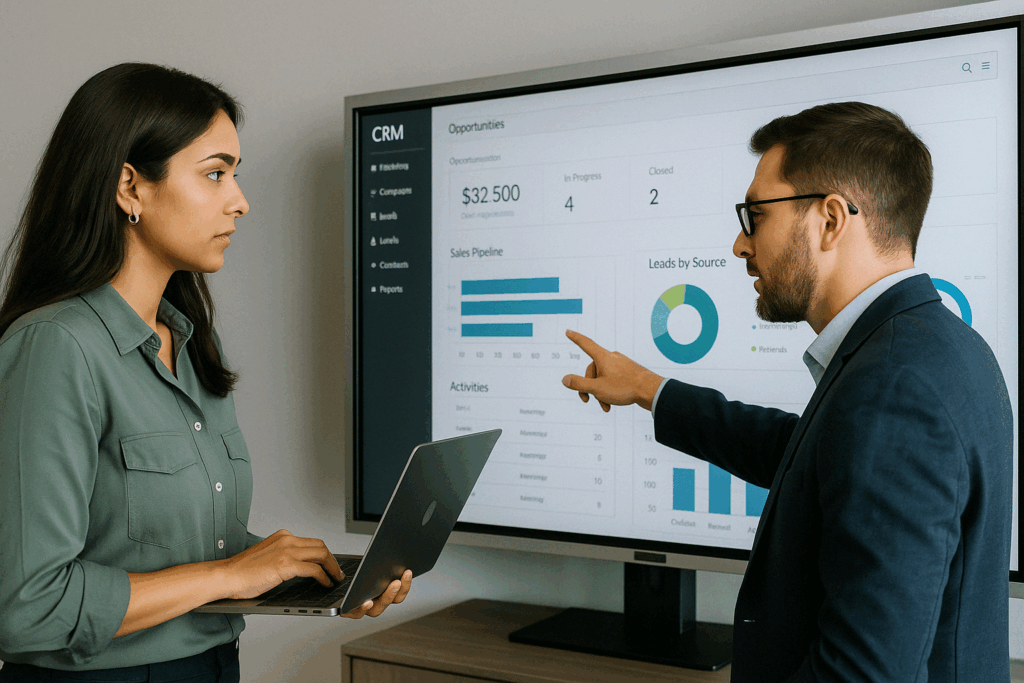
What gets measured gets managed—and both departments need to track the same success metrics.
“This is the #1 thing that both sales & marketing teams have to be 100% in synch about,” Kerry emphasizes.
Kerry elaborates: “When sales and marketing teams are aligned, it can significantly boost lead conversion, customer retention, and revenue. To ensure they stay in sync, here are the key performance indicators (KPIs) they should track together: Lead Quality, Lead Conversion, Customer Acquisition, Customer Lifetime Value, Revenue Attribution, Pipeline Velocity, Content Engagement, Campaign ROI, Sales Feedback Loop, and Win Rate.”
Molly provides practical advice: “First, align on the campaign’s goal. For example, if the objective is to drive interest in a specific model, then relevant KPIs would include: increased website traffic to that model’s VDP, more phone calls, and higher email inquiry volume. Shared accountability for these outcomes is key.”
The Digital Transformation: Looking Ahead
As the automotive industry continues its digital evolution, how will the sales-marketing relationship change?
Kerry paints a picture of what’s ahead: “Automotive advertising is at a turning point. With digital transformation accelerating and consumer behavior shifting toward online-first, the way sales and marketing teams collaborate is changing fast.”
She predicts: “The buyer’s journey is increasingly digital, so marketing won’t just hand off leads to sales anymore—both teams will jointly own the full funnel. Expect tighter alignment via shared KPIs like customer lifetime value (CLV), lead-to-sale conversion, and engagement metrics.”
Molly adds: “Everything is going digital, and sales will increasingly rely on tech and data teams to guide targeting, messaging, and timing. We now know more about consumer behavior than ever before. Great salespeople and marketers alike will need to use that data smartly and strategically to drive performance.”
Essential Skills for the Future
For women looking to advance in either sales or marketing within automotive, what skills should you be developing now?
Technical Skills:
- Data Literacy: “Interpreting customer data and behavioral trends to make smart decisions. Leveraging AI and machine learning tools for predictive marketing,” recommends Kerry.
- Content Creation: Develop skills in creating engaging content—videos, blogs, virtual tours, etc.—that educates and builds trust with potential buyers. Kerry notes that this is increasingly important as digital channels play a bigger role in the buyer’s journey.
- E-commerce & Online Sales: Understanding digital retailing platforms and virtual test drives as car buying increasingly moves online
Essential Mindsets:

- Customer-Centric Thinking: “Shift from selling cars to solving customer problems and creating value,” Kerry advises.
- Agility & Adaptability: “Embrace fast-paced changes, whether it’s in tech, customer behavior, or regulations.”
- Empathy & Emotional Intelligence: As sales becomes more consultative, the ability to truly listen and understand the customer is crucial.
Molly adds an important caution: “Avoid overusing automation. While automated texts or emails can help scale efforts, if there’s no quick access to a real person, consumers will opt out. The real power lies in using these tools to enhance, not replace, what we’re already doing well.”
Your Path Forward: Becoming the Bridge
I’ve come to believe that some of the most valuable professionals in our industry are those who understand both the sales and marketing worlds—those who can speak both languages fluently. I call them “bridge builders.”
Throughout my career, I’ve witnessed how a single person with the right perspective can transform departmental dynamics. Those moments when someone says, “Have we considered how this will impact the showroom experience?” or “What if we involved the marketing team in our sales training?” often spark the most innovative solutions.
This bridge-building skill isn’t just nice to have—it’s increasingly becoming a career differentiator. In an industry undergoing rapid digital transformation, professionals who can navigate cross-functional challenges bring exceptional value to their organizations.
Whether you’re currently in sales wanting to understand marketing better, a marketing professional seeking to align more closely with sales objectives, or someone looking to enter the industry, these insights from Kerry and Molly provide a roadmap for becoming that invaluable connector.
The next time you notice a gap between departments, don’t just observe it—be the one who steps forward to address it. Ask the uncomfortable questions. Initiate the cross-team meetings. Champion unified goals and metrics.
As Kerry reminds us, true leadership means “allowing leaders to lead, and not manage,” creating “a more autonomous culture, in which sales and marketing teams will feel empowered to collaborate and contribute to a more unified strategy or approach.”
Your automotive career might begin in sales or marketing, but your greatest impact will come from the bridges you build between them. The question isn’t just whether you can excel in your department—it’s whether you can help others excel in theirs.
Are you ready to be that bridge in your organization?
Ready to transform your automotive career? Explore our resources at Women In Automotive and join a community of bridge-builders who are reshaping the industry together.